
How to Turn Your Knowledge into a Digital Product
Contents
I talk to people who tell me they want to create a digital product but have no idea what they’d sell. And almost every time, just by listening to them talk, I can hear it. I can hear the digital product. The product is already there. I hear it in:
- The way they explain how they organize their classroom.
- The system they built to onboard their new hires.
- The methods they use to help their clients calm down before a big presentation.
- The tools they create to share with their colleagues to complete projects.
If you’ve spent years getting good at something, you can absolutely turn that knowledge into a digital product because what you know is genuinely useful to other people who haven’t figured it out yet.
What does it mean to turn your knowledge into a digital product?
Turning your knowledge into a digital product means taking something you already know how to do well and organizing it into a format that someone else can learn from, use, or follow on their own. That format might be a workbook, a mini-course, a set of templates, a video walkthrough, or a simple PDF guide.
The keyword here is “already.”
You’re not inventing something new. And you don’t need to go back to school or get any kind of new degrees or certifications. Instead, you’re taking the experience you’ve built up over years of doing your work and putting it into a structure that makes sense for someone who’s a few steps behind you.
That’s it.

Why do so many people overlook what they already know?
I think this happens because the things we’re good at start to feel invisible to us. When you’ve done something long enough, it stops feeling like “expertise” and starts feeling like common sense.
You forget that the process you use to plan a quarterly budget, or the way you break down a complicated topic for your students, or the checklist you run through before every client meeting, those things took you years to develop. And it becomes second nature because you’re now an “expert” at doing it.
I catch myself doing this too. I’ll explain something about course design that feels completely obvious to me, and the person I’m talking to will say, “Wait, that’s so helpful. I never would have thought of it that way.” That gap between what feels obvious to you and what feels like a revelation to someone else is exactly where your digital product lives.
So, if you’ve been waiting for some big, original idea to strike before you create your own digital product, you might be looking right past the thing that’s already there.
How Do You Figure Out What Knowledge You Have That’s Worth Turning into a Product?
Start by paying attention to what people ask you about. Not what you think they should ask, but what they do ask, over and over. Those repeated questions are a signal. They’re telling you that you have something figured out that other people are still working through.
Here are a few prompts I find helpful when I’m trying to pull out a product idea:
- What do coworkers or friends come to you for help with?
- What’s a process you’ve built for yourself that saves you time or stress?
- What’s something you explain to new people on your team more than once?
- If someone sat next to you for a week, what would they want to write down?
Spending just fifteen minutes or so with these questions really gets things bubbling. And once you see it, you can’t unsee it: That workflow you cobbled together, that onboarding checklist, that method for meal planning or budgeting or managing a caseload, it’s all sweet digital product material.
What Format Should Your First Digital Product Take?
Here’s where I see people get stuck, and I get it. There are so many options. But if you’re creating your first digital product, I’d keep it simple. The format should match how your audience would naturally want to consume the information.
- If your knowledge is step-by-step and action-oriented, a workbook or checklist works well.
- If it’s more visual or demonstration-based, short videos or screen recordings might be a better fit.
- If it’s reference material people will want to come back to, a guide or template set makes sense.
You don’t need to build a full course right out of the gate. One of the best ways to turn your knowledge into a digital product for the first time is to start with something small. A focused workbook. A single template pack. A quick-start guide. These smaller products let you test your idea, get feedback, and build confidence before you invest months into something bigger.
Do You Need to Be an Expert to Create a Digital Product From What You Know?
Nope. You don’t need to be the world’s top authority on a topic. You only need to be a few steps ahead of the person you’re helping. That’s a lower bar than it sounds like, and it’s an honest one.
Been a nurse for twenty years? Then you know a thing or two about talking to patients that a nursing student would pay to learn.
Were you a middle school teacher for a decade? I bet you’ve developed classroom management strategies that a first-year teacher would find incredibly useful.
Even if you’ve done something like managing a team through a difficult transition, that experience has real value to someone facing the same thing for the first time.
I think the “expert” label trips people up because it sounds like you need a credential or a book deal or to answer questions at a TED talk.
You don’t.
All you need is experience and the willingness to organize it in a way that helps someone else. That’s enough to turn your knowledge into a digital product that people will genuinely appreciate.
What If You’re Not Sure Anyone Would Pay for What You Know?
This is a fair concern, and I always ask myself this question (imposter syndrome). So, before you spend weeks building something, it’s worth doing a little bit of research (I call it detective work). Search for your topic on Google, Pinterest, or Etsy and see what’s already out there. If people are selling products in your area, that’s a good sign, not a reason to back off. It means there’s demand.
You can also pay attention to online communities, forums, or Facebook groups where your potential audience hangs out. What questions keep coming up? What are people frustrated about? If your knowledge addresses those frustrations, you’ve got something.
The goal isn’t to wait for perfect certainty. It’s getting enough of a signal that you feel comfortable starting small. You can always adjust your digital product after you get it in front of a few people.
Where Do You Start Once You’ve Identified a digital product you want to create?
Once you can name the thing that you know other people need, the next step is simpler than you might expect. Write down the main result or outcome someone will achieve with your digital product. Then list the three to five key steps or concepts they need to get there. That’s your rough outline.
You don’t need fancy software for this part. You can use a notebook, a Google Doc, or even voice memos on your phone will work. I find that talking it out loud is sometimes easier than writing it down, especially when you’re trying to turn all of your vast amount of knowledge into a single digital product for the first time. The blank page feels intimidating.
From there, you choose your format, create the content, and get it into a simple, clean file that someone can download and use. It doesn’t need to be perfect! Focus on making sure it solves the problem and helps people reach the desired result or outcome.
ready to turn your knowledge into your own digital product?
If this post made you think “okay, I might have something,” that’s your signal. You don’t need to have it all figured out before you take the next step.
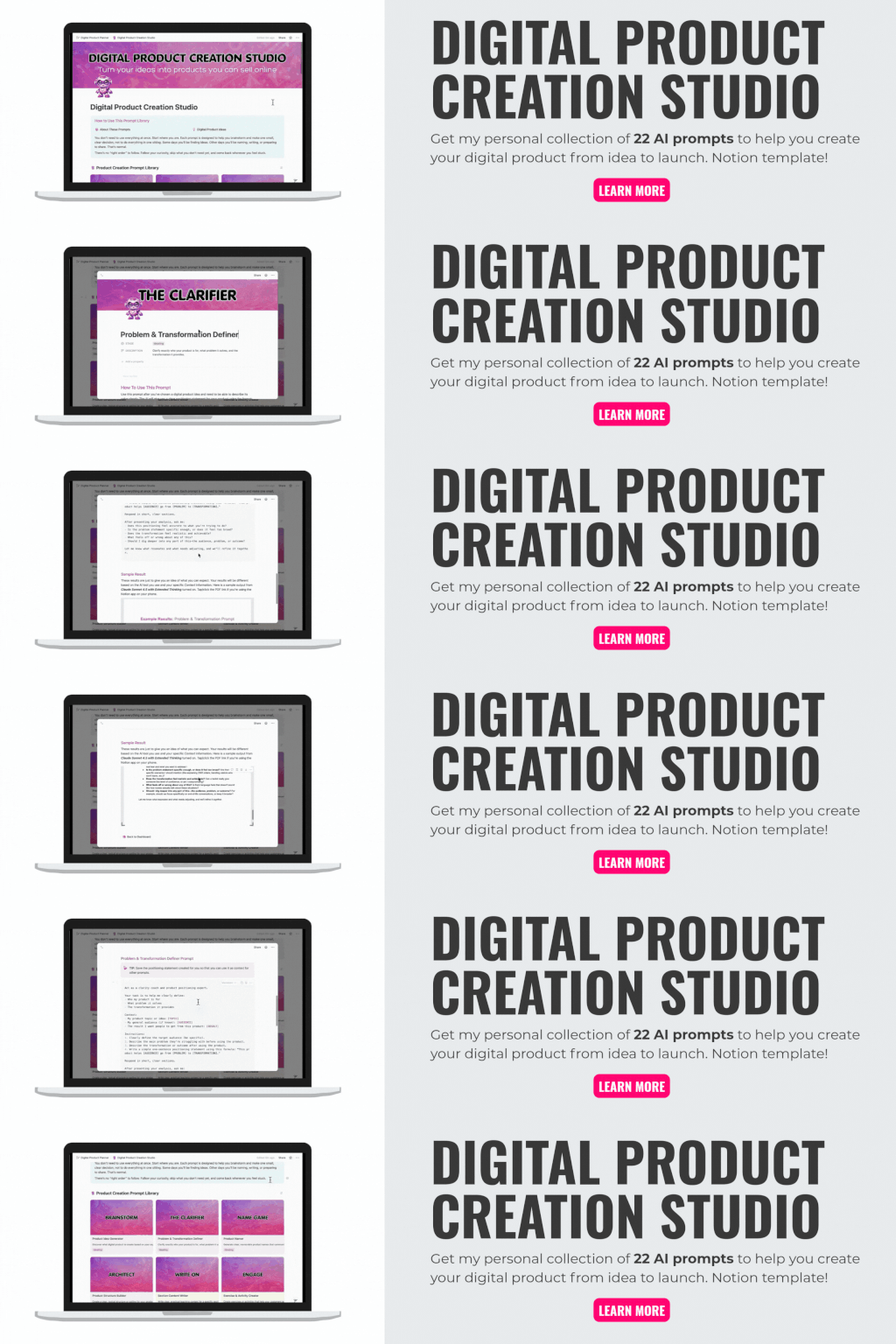
The Digital Product Creation Studio walks you through every step of building your first digital product, from pulling out your idea to choosing a format to getting it ready to sell. It’s designed for people who have the knowledge but need some help pulling everything together to create and sell their own digital product. Click here to learn more!
FAQs: Turning Your Knowledge into a Digital Product
How long does it take to turn your knowledge into a digital product?
It depends on the format and scope, but a simple product like a checklist, template, or short guide can be created in a few hours to a weekend. A more involved workbook or mini-course might take a few weeks. Starting small is the fastest way to get something finished and out into the world.
What if my knowledge or skills feels too niche to turn into a digital product?
Niche is a strength, not a weakness. The more specific your product is, the easier it is for the right person to find it and feel like it was made for them. A budgeting template for freelance photographers is more compelling than a generic budgeting template.
Do I need special tools or software to create my first digital product?
Not at all. You can create a solid digital product using tools you probably already have: Google Docs, Canva, PowerPoint, or even a simple PDF editor. The tool matters far less than the content inside it.
Can I turn my knowledge into a digital product if I’m not tech-savvy?
Yes. The most important part of a digital product is the knowledge itself, not the technology used to deliver it. If you can write an email or create a simple document, you have enough tech skill to get started. The Digital Product Creation Studio is designed to walk you through the process in a way that doesn’t assume you’re a tech person.